
Choosing between all terrain vs mud terrain tires can feel confusing because both look trail-ready, both are popular on 4×4 builds, and both can improve traction compared to basic highway tires. But they are not the same tire, and the wrong choice can make your truck louder, heavier, rougher, more expensive to drive, or less useful for the way you actually use it.
The best off-road tire is not always the most aggressive tire. It is the tire that matches your vehicle, your terrain, your driving style, and how often you drive on pavement. A daily-driven truck, weekend trail rig, hunting vehicle, overland build, mud truck, and rock-crawling setup all need different priorities.
This guide breaks down all terrain vs mud terrain tires in a simple way so you can choose the right tire before spending money on a setup you regret.

Start With How You Actually Drive Your 4×4
Before choosing tires, be honest about where your vehicle spends most of its time. A truck that drives to work every day and hits forest roads on weekends usually needs a different tire than a rig that spends most of its time in deep mud, rocks, ruts, or rough trails.
All terrain tires are usually the better choice for drivers who split their time between pavement, dirt roads, gravel, snow, camping trails, and mild to moderate off-road use. Mud terrain tires are usually better for drivers who need stronger bite in deep mud, loose dirt, wet trails, rocks, and harder off-road conditions.
The mistake is choosing tires only because they look aggressive. A tire can look amazing in the driveway and still be annoying on the highway, heavy on the vehicle, expensive to replace, or wrong for your terrain.
1. All Terrain Tires Are Usually Better for Daily Driving
All terrain tires are built to balance road comfort and off-road traction. They usually have a less aggressive tread pattern than mud terrain tires, which helps reduce noise, vibration, and harshness on pavement.
For most 4×4 owners, all terrain tires are the smarter first upgrade. They can improve traction on dirt, gravel, light mud, snow, and rocky roads while still keeping the vehicle comfortable enough for everyday driving.
A good all terrain tire makes sense if your truck is a daily driver, tow vehicle, work truck, family SUV, camping rig, or weekend trail vehicle. It gives you better capability without turning every highway drive into a loud, rough ride.
All terrain tires are not perfect for every situation, but they are often the best match for people who want better traction without giving up too much comfort, mileage, and road manners.
2. Mud Terrain Tires Are Better for Deep Mud and Hard Trails
Mud terrain tires are built for more aggressive off-road use. They usually have larger tread blocks, wider voids, stronger sidewalls, and a design that helps the tire clear mud, dirt, and debris.
If you drive in deep mud, wet clay, rutted trails, loose dirt, rocky terrain, or off-road parks, mud terrain tires may give you the bite that all terrain tires cannot. They are made to dig, grab, and keep moving when the trail gets messy.
The tradeoff is that mud terrain tires can be louder, heavier, rougher, and less efficient on pavement. They may also wear faster if most of your driving is on the road.
For a trail-only rig, mud terrains can make a lot of sense. For a daily driver that only sees mild trails, they may be more tire than you actually need.
3. Match Tire Size to Clearance and Gearing
Tire type matters, but tire size matters too. Bigger tires can improve ground clearance under the axles and give your 4×4 a stronger stance, but they can also create rubbing, heavier steering, slower acceleration, more braking strain, and extra stress on drivetrain parts.
Before jumping to a larger tire, make sure your vehicle has enough clearance. Look at fender clearance, suspension travel, wheel offset, backspacing, turning clearance, and how the tire fits when the suspension flexes.
This is where your off-road lift kit matters. A lift kit can help clear larger tires, but the tire still needs to fit correctly when turning, braking, reversing, and driving over uneven terrain.
Before changing tire size or pressure, check trusted tire safety guidance and your vehicle’s recommended tire information.
4. Think About Road Noise and Ride Comfort
One of the biggest differences between all terrain vs mud terrain tires is how they feel on pavement. All terrain tires usually ride quieter and smoother. Mud terrain tires usually create more hum, vibration, and rolling noise because of the bigger tread blocks and wider spacing.
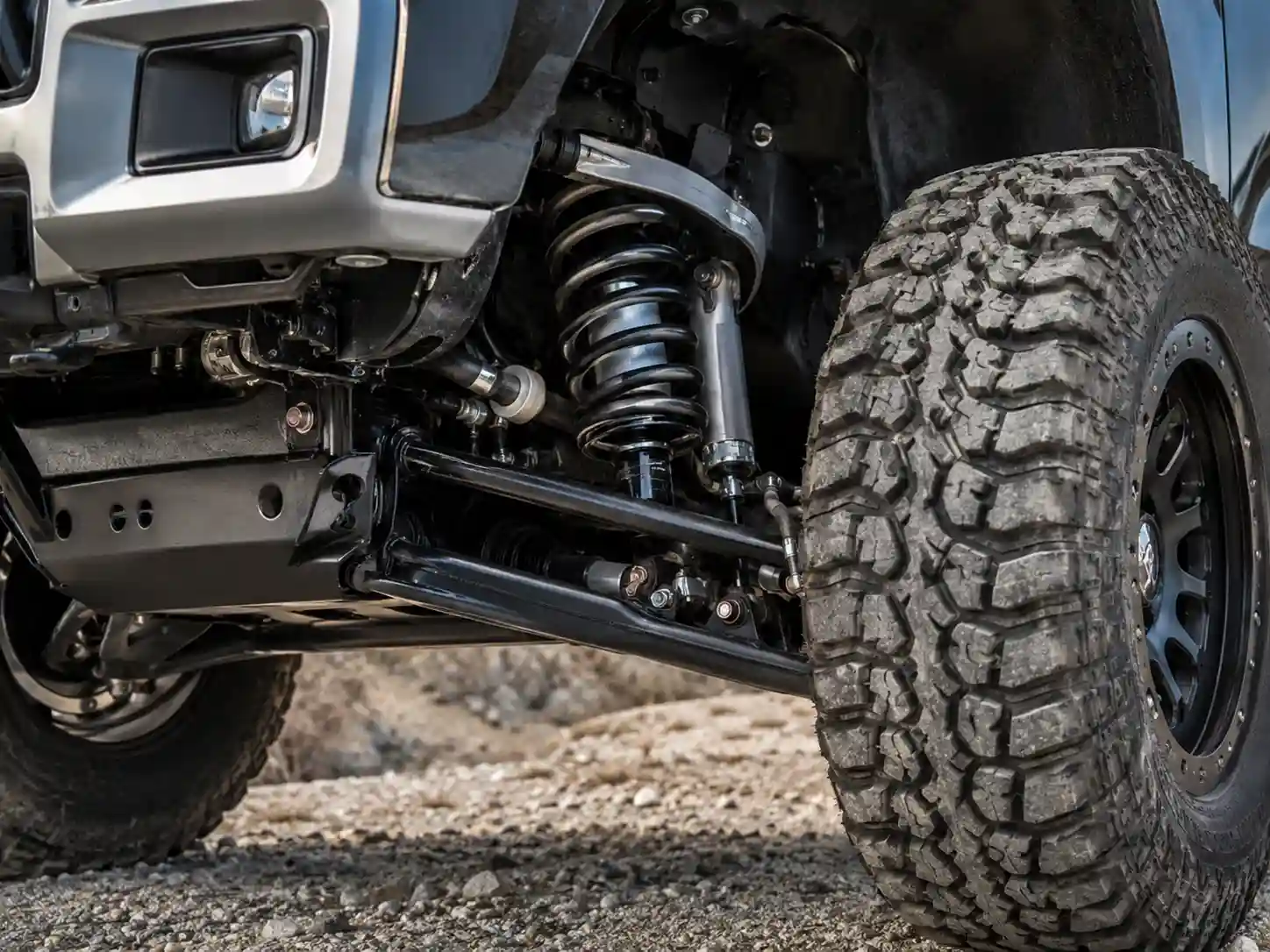
That does not mean every mud terrain tire is terrible on the road, and it does not mean every all terrain tire is silent. But in general, the more aggressive the tread, the more you may notice it during highway driving.
If your 4×4 is a daily driver, ride quality matters. A tire that feels cool for the first week can become annoying if you drive long distances, commute every day, or use the truck for family trips.
Choose the tire that fits your real use, not just the one that looks toughest in photos.
5. Do Not Pick Tires Only for Looks
Aggressive tires can completely change the look of a truck. That is part of why people love them. But looks should not be the only reason you choose a tire.
The right tire should match your terrain, vehicle weight, wheel setup, lift height, driving speed, and comfort needs. A heavy mud terrain tire on the wrong setup can make a truck feel slower, rougher, and less efficient.
If you mostly drive pavement, gravel, snow, and mild trails, a quality all terrain tire may be the better choice. If you regularly fight deep mud, rocks, ruts, and loose trail surfaces, a mud terrain tire may be worth the tradeoff.
Good tire choice is about function first. The aggressive look should be a bonus, not the whole plan.
Build Your Tire Setup
Choose Tires That Actually Match Your Trail
A better 4×4 setup starts with the right wheels, tires, suspension, and recovery gear. Build smarter before your next trail ride.
Shop Wheels & Tires › Shop Recovery Gear ›6. Tire Pressure Changes How Your Tires Work
Tire pressure can make a big difference off-road. Lowering pressure on the trail can help the tire flex, increase contact with the ground, and improve traction on rocks, sand, dirt, and uneven surfaces.
But tire pressure needs to be handled carefully. You need a tire pressure gauge, a reliable way to air back up, and a basic understanding of safe highway pressure before driving home.
Never guess blindly. Check your vehicle’s recommended tire pressure for normal road driving, and do not use the maximum number printed on the tire as your normal street pressure.
Airing down can help off-road, but airing back up is just as important. Driving too fast on underinflated tires can create heat, damage, poor handling, and safety problems.
7. Rain, Snow, Rocks, and Sand Change the Best Choice
Not all off-road terrain is the same. A tire that works well in mud may not be the best tire for snow, sand, wet pavement, or long highway trips.
All terrain tires often make more sense for mixed conditions because they balance several types of driving. They can work well for gravel, forest roads, light snow, dirt, camping trails, and daily use.
Mud terrain tires usually shine when the trail is loose, wet, sticky, or rough. They can clear mud better and bite harder in deeper terrain, but they may not be as comfortable or predictable on wet pavement or packed snow.
If your area has a lot of snow, rain, and highway miles, do not choose tires only by how aggressive they look. Choose based on the conditions you actually drive through.
8. Wheels, Offset, and Fitment Matter Too
Tires do not work alone. Wheels, offset, backspacing, lift height, suspension travel, and fender clearance all affect how the tire fits and performs.
A tire that technically fits may still rub when turning or flexing. A wheel with the wrong offset can push the tire too far out, create clearance problems, throw debris down the side of the truck, or put extra strain on parts.
When upgrading wheels and tires, think of them as one system. The tire size, wheel size, width, offset, and suspension setup should all work together.
For most drivers, the goal is simple: choose a tire and wheel setup that clears properly, supports the vehicle’s weight, drives safely, and improves traction without creating new problems.
9. Recovery Gear Still Matters Even With Better Tires
Better tires can help you avoid getting stuck, but they do not make your vehicle unstoppable. Even a great tire can lose traction in mud, snow, sand, wet rocks, or deep ruts.

That is why recovery gear still matters. A basic recovery setup should include traction boards, rated recovery points, recovery straps, soft shackles or rated shackles, gloves, a shovel, and a way to air tires back up.
If you are choosing tires for real trail use, do not stop at the tire upgrade. Build the vehicle as a complete system with tires, suspension, recovery gear, protection, and smart driving habits.
A truck with good tires and no recovery plan can still become a problem fast.
10. The Best Tire Is the One That Matches Your Build
For a daily driver, an all terrain tire is usually the better first choice. For deeper mud, rougher trails, and more serious off-road use, a mud terrain tire may be worth the noise and weight.
The best tire is not always the biggest tire or the most aggressive tire. The best tire is the one that matches your 4×4, your trail use, your budget, and your comfort needs.
If you are also adding a lift kit, wheels, armor, bumpers, or camping gear, think about the whole build. Heavier parts can change how the vehicle drives and what tire setup makes sense.
A smart tire upgrade should make your 4×4 more capable, not harder to live with.
Common All Terrain vs Mud Terrain Tires Mistakes
The biggest mistake is buying tires for appearance before thinking about real driving conditions. A tire should solve a problem, not just make the truck look more aggressive.
Common mistakes include choosing tires that are too large, ignoring wheel offset, skipping alignment, forgetting tire pressure, buying mud terrain tires for mostly pavement driving, or choosing cheap tires with poor road manners.
Another mistake is upgrading tires without thinking about recovery gear. Better traction helps, but it does not replace rated recovery points, traction boards, straps, or safe recovery habits.
A better off-road build should also respect the trail and stay on designated roads, trails, and areas.
Best Tire Choice for Most 4×4 Owners
For most 4×4 owners, the best starting point is a quality all terrain tire in a practical size. It gives better traction than a highway tire without making the vehicle too loud, heavy, or uncomfortable.
If you drive harder trails, deep mud, sharp rocks, or off-road parks often, a mud terrain tire may be the better choice. Just understand the tradeoffs before buying.
A smart upgrade order looks like this:
Start with the right tire type for your actual terrain.
Choose a practical tire size that fits your vehicle.
Match the tire with the right wheel size, offset, and backspacing.
Make sure your suspension and lift kit support the tire properly.
Add recovery gear before you trust the vehicle on harder trails.
This approach keeps the build practical and helps you avoid wasting money on parts that do not work together.
For a full build example, see our Toyota Tacoma off-road setup guide.
Read Next
Build Around the Tires You Choose
The right tire choice affects lift height, recovery needs, trail prep, and the rest of your 4×4 setup.
Final Thoughts
Choosing all terrain vs mud terrain tires is really about choosing how you want your 4×4 to perform. All terrain tires are usually better for daily drivers, mixed use, lighter trails, gravel roads, snow, and long trips. Mud terrain tires are usually better for deeper mud, rougher trails, rocks, ruts, and more aggressive off-road use.
Do not buy tires only because they look tough. Buy tires that match your terrain, your lift kit, your driving style, and your real budget.
A clean 4×4 build should feel capable, stable, useful, and ready for the next trail without making the vehicle worse every time you drive it on the road.

